Description
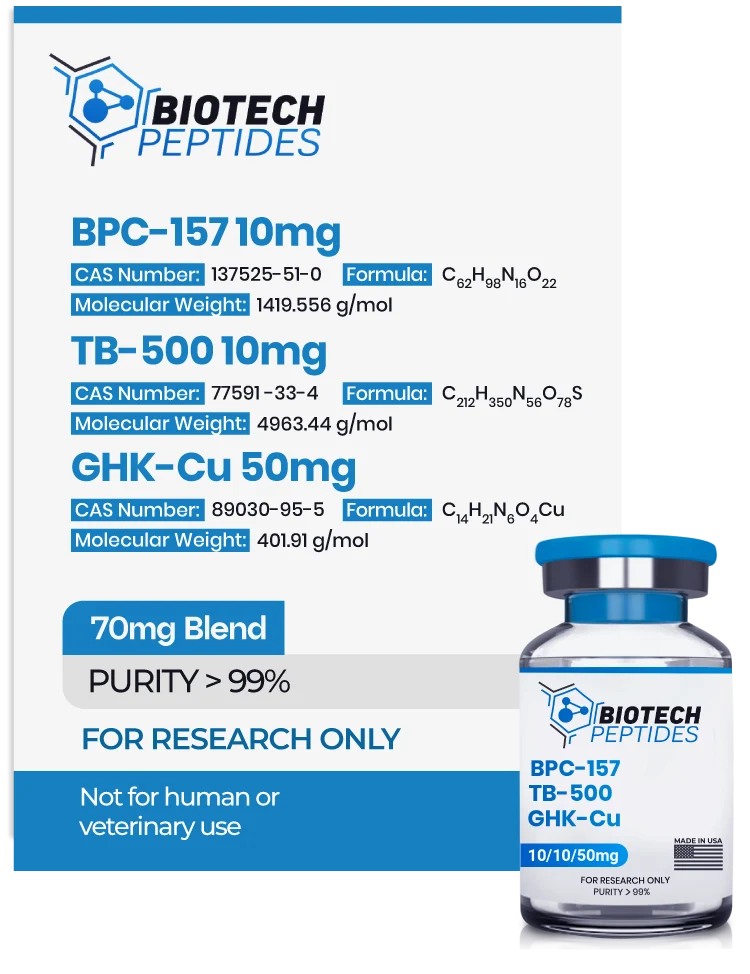
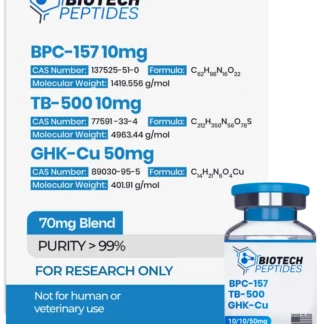
BPC-157, TB-500 & GHK-Cu Research Blend (70mg)
For qualified research into advanced tissue repair and cellular communication pathways. This isn’t a simple single-compound vial. This is a precision-formulated 70mg blend of three of the most studied peptides in regenerative research, designed for laboratory investigation of synergistic effects. We call it the “Triad Protocol” for a reason. Each component brings a distinct, documented mechanism to the table, allowing researchers to examine a comprehensive network of signaling related to repair, structure, and defense.
Price: $335.50 | Ships same day if ordered by 12 PM PST.
The Breakdown: What’s In The Vial
Think of this as building a research team where each member has a specific, critical job. Here’s what each peptide brings to the experimental model.
BPC-157 (15-amino acid sequence)
This peptide is derived from a protective protein in the gut. In research models, it doesn’t just sit in one place. Studies point to its systemic activity, influencing a wide range of signaling pathways. Key areas of laboratory observation include its potential role in supporting angiogenic responses (the formation of new blood vessels) and modulating nitric oxide pathways. Research, such as a 2011 study in the Journal of Applied Physiology, has noted its association with supporting tendon fibroblast outgrowth, migration, and survival under induced stress conditions. It appears to work through post-translational modification, influencing key signaling molecules like paxillin and focal adhesion kinase, which are crucial for cell movement and structure.
TB-500 (Synthetic fragment of Thymosin Beta-4)
If BPC-157 is about signaling, TB-500 is about structure and movement. Its primary researched mechanism involves binding to actin, a fundamental protein that makes up the cell’s cytoskeleton. By regulating actin polymerization, TB-500 is studied for its potential to influence cell migration—how cells move to a site—and overall tissue remodeling. Furthermore, a 2014 study in the Journal of Biological Chemistry indicated that its parent compound, Thymosin Beta-4, may promote the expression of microRNA-146a, a key regulator of inflammatory signaling pathways. This positions TB-500 as a compound of interest for research into structural repair and cellular communication under duress.
GHK-Cu (Copper-Bound Tripeptide)
This one is the organizer and communicator. GHK-Cu is a natural peptide that declines with age. In research settings, it’s closely examined for its role in gene expression and extracellular matrix regulation. It’s known to bind copper, a vital cofactor in numerous enzymatic processes. Studies, including a 2018 review in the International Journal of Molecular Sciences, highlight its association with supporting collagen synthesis and antioxidant enzyme activity. An in-vitro study from 2018 in the International Journal of Physiology, Pathophysiology and Pharmacology suggested GHK may interact with and help neutralize specific reactive oxygen species like hydroxyl and peroxyl radicals. In practical research terms, this makes it a focal point for studies on skin and connective tissue models, as well as oxidative stress responses.
The Synergy: Why Blend Them?
Running experiments with individual compounds gives you data. Running them together in a controlled blend allows you to investigate interaction. The “Triad Protocol” is formulated based on the hypothesis that these mechanisms can work in concert:
- BPC-157 may prime the area with protective signaling and support vascularization.
- TB-500 may then help direct structural cells to the site and support the framework for rebuilding.
- GHK-Cu may simultaneously provide the genetic and environmental cues for proper collagen deposition and matrix organization, while helping manage oxidative byproducts.
This creates a multi-angled research approach to the complex process of tissue repair, far more comprehensive than studying a single pathway in isolation.
Key Research Citations & Specifications
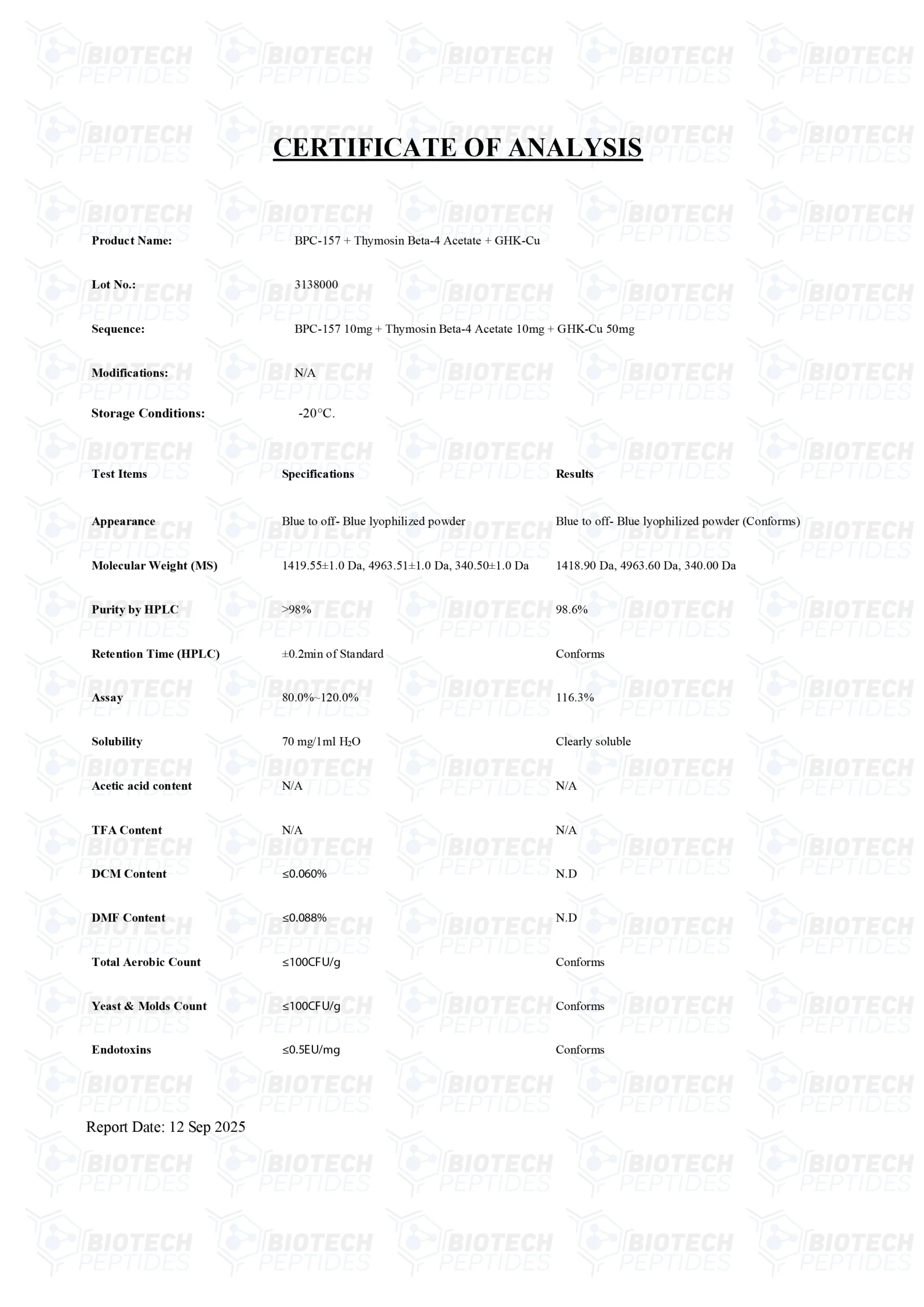
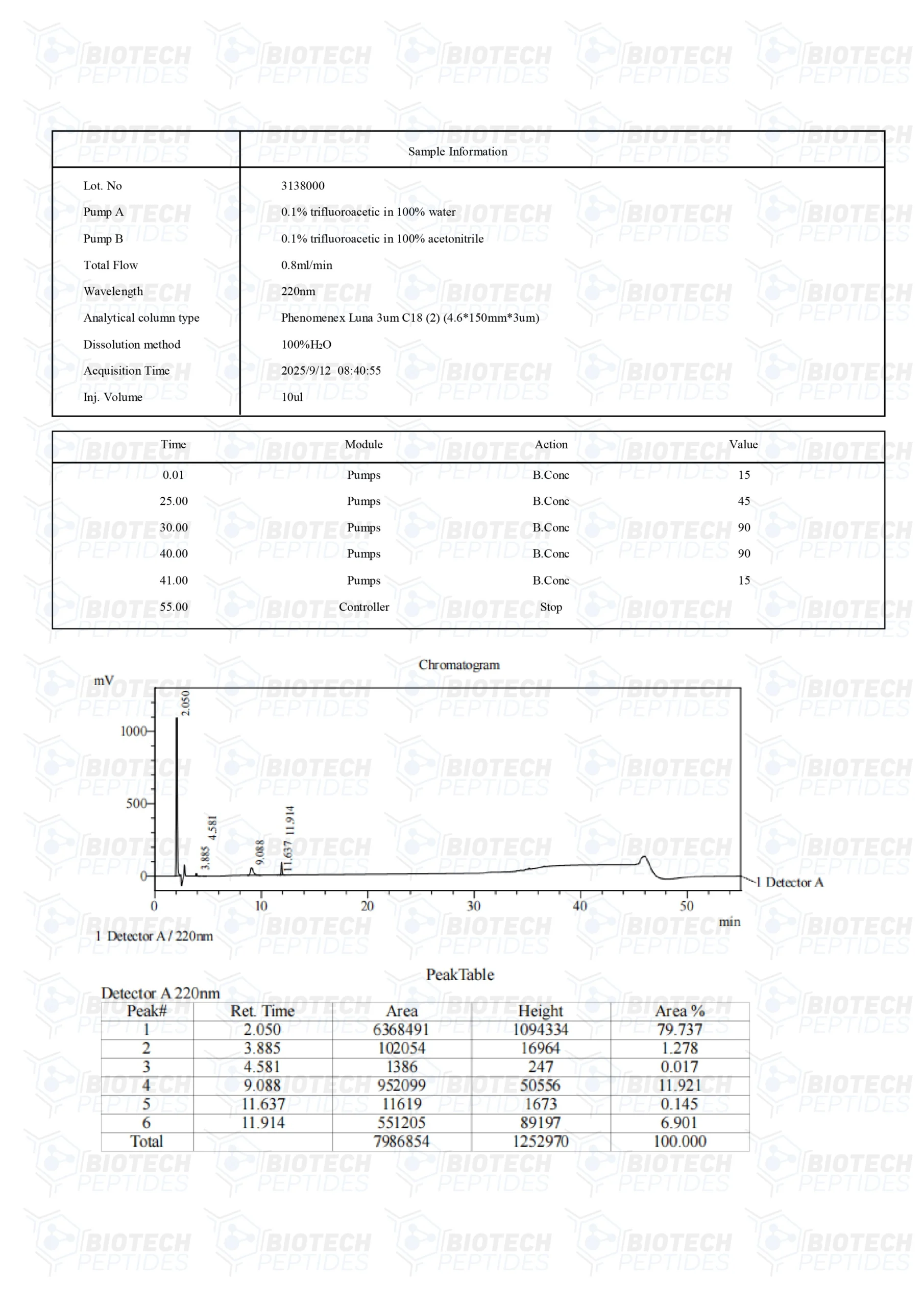
This isn’t speculation. Our formulation is grounded in published, peer-reviewed science. Below are core references and molecular data for your documentation.
Molecular Specifications:
- BPC-157: Molecular Formula: C62H98N16O22 | Molecular Weight: 1419.5 g/mol
- TB-500: Molecular Formula: C212H350N56O78S | Molecular Weight: 4963 g/mol
- GHK-Cu: Molecular Formula: C28H48CuN12O8 | Molecular Weight: 744.3 g/mol
Selected Reference Studies:
- Chang et al. (2011). The promoting effect of pentadecapeptide BPC 157 on tendon healing involves tendon outgrowth, cell survival, and cell migration. J Appl Physiol. 110(3), 774-80. [PMID: 21030672]
- Sikiric P. (1999). The pharmacological properties of the novel peptide BPC 157 (PL-10). Inflammopharmacology. 7(1), 1–14.
- Cangul et al. (2006). Evaluation of the effects of tripeptide-copper complex and zinc oxide on open-wound healing in rabbits. Vet Dermatol. 17(6), 417-23. [PMID: 17083573]
- Pickart & Margolina. (2018). Regenerative and Protective Actions of the GHK-Cu Peptide. Int J Mol Sci. 19(7), 1987.
- Sakuma et al. (2018). The peptide glycyl-ʟ-histidyl-ʟ-lysine is an endogenous antioxidant… Int J Physiol Pathophysiol Pharmacol. 10(3), 132–138.
- Santra et al. (2014). Thymosin β4 up-regulation of microRNA-146a promotes oligodendrocyte differentiation and suppression of the Toll-like proinflammatory pathway. J Biol Chem. 289
Reviews
There are no reviews yet.